5 months
Live before a government suspension
Work / Korensi
Sierra Leone's government launched Korensi to move public transport from cash to contactless cards and apps. I designed the admin side: the platforms that oversee the whole system and run each transport company.
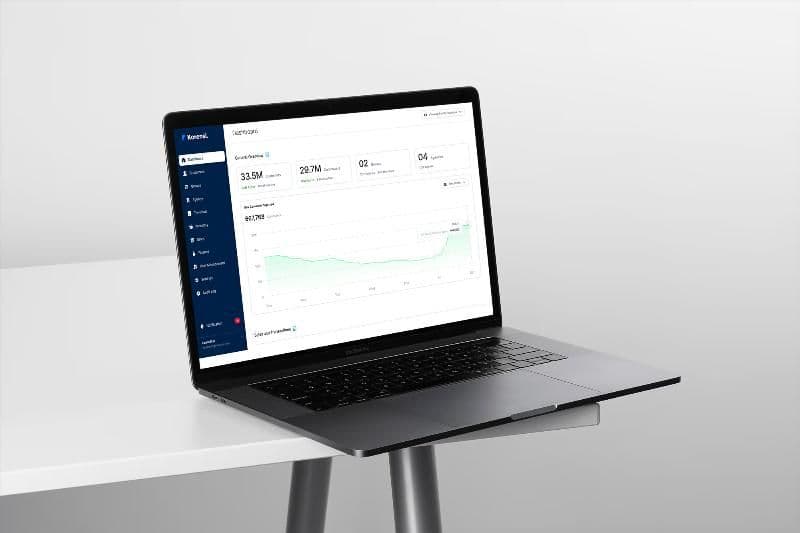
Minibuses, taxis, okadas and kekes all ran on cash. Korensi launched on 2 February 2024 and recorded over a million ticket transactions in its first month.
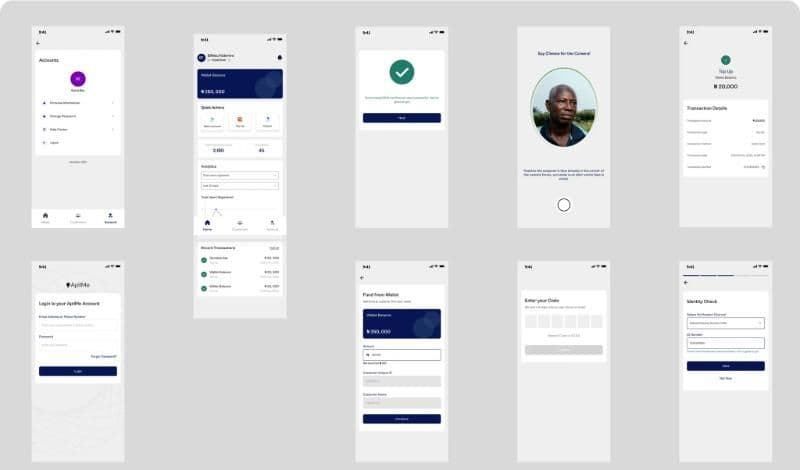
The customer, driver and agent apps handled transactions, but nothing managed the system behind them. The government needed to oversee several bus companies, track tickets across hundreds of agents, prevent fraud and make decisions from data.
The question: how do we turn complex, multi-layered admin data into interfaces that give the government oversight and give operators independence, with clear permission boundaries?
This was new ground with no system to audit. I studied Nigeria's BRT operations, fleet tools like Uber for Business, city transit dashboards and enterprise admin tools.
Most transport systems either had one admin tool with messy permissions, or separate tools with siloed data. The PMs also flagged the biggest risk: with paper tickets, nobody could tell if an agent sold tickets and kept the cash. That became a primary design driver.
Four decisions that shaped both platforms.
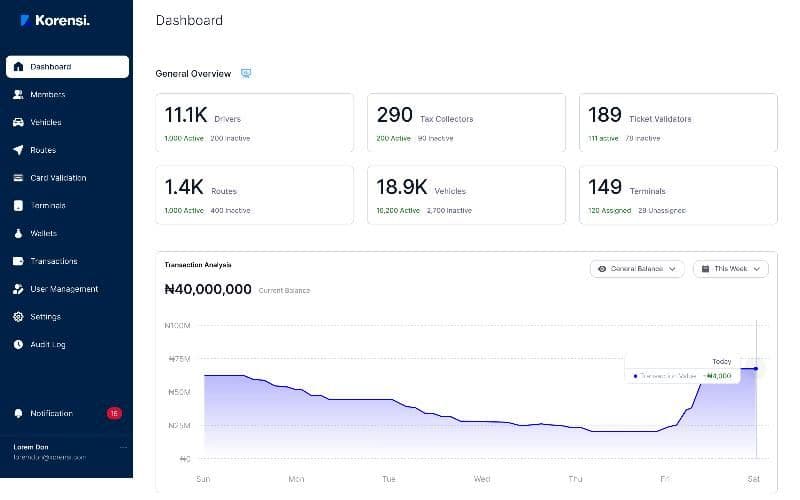
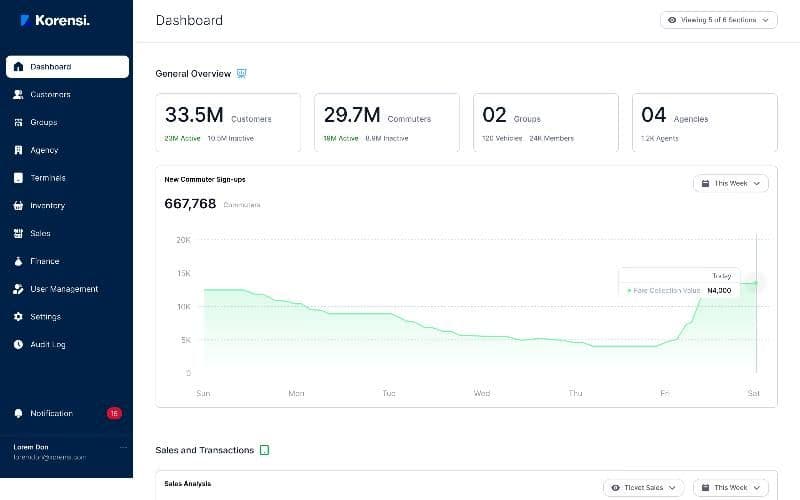
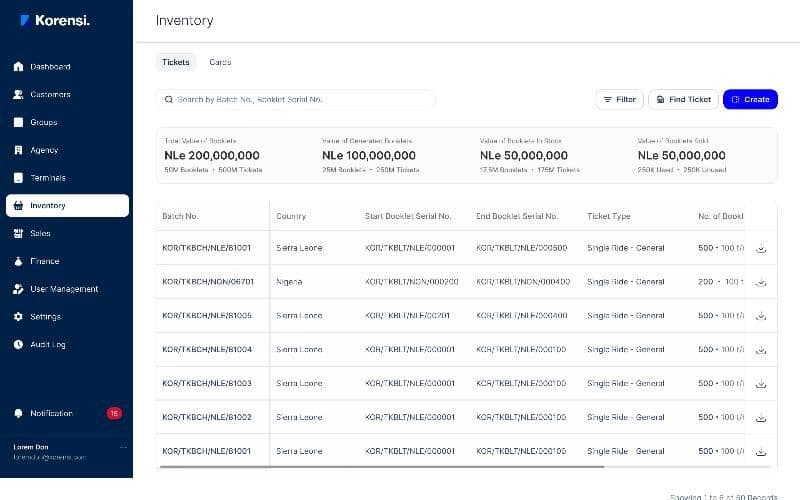
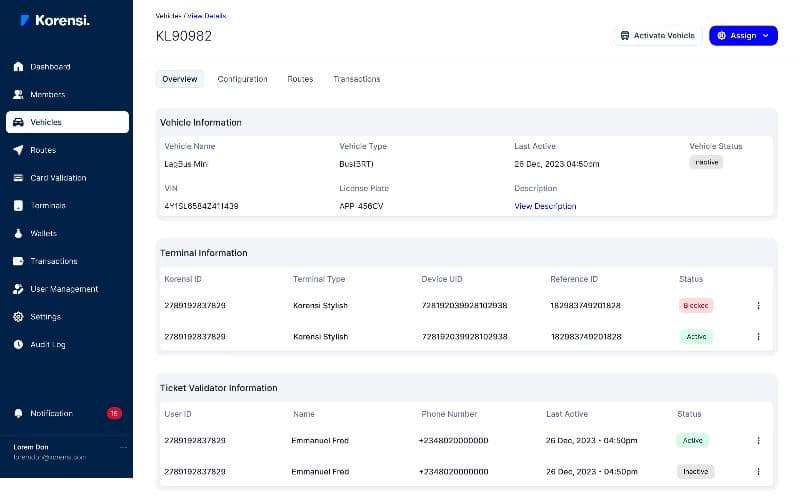
Progressive disclosure: summaries on dashboards, detail in modules. A persistent sidebar so nobody gets lost. Lower density on dashboards for scanning, higher density in modules for real work.
Status colours applied the same everywhere (green healthy, yellow attention, red issue, grey pending) and date filters on every analytics view, because admins think in "this week" and "last month".
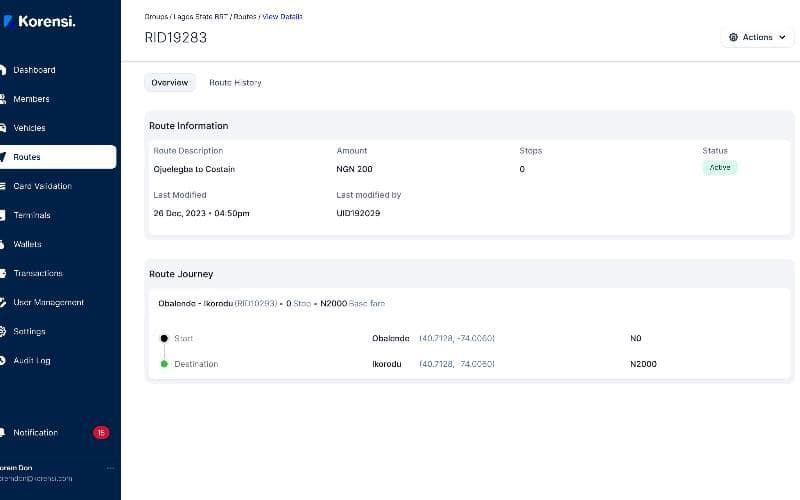
Tickets managed through the system
Live before a government suspension
Reported issues with the admin platforms
Design ran April to September 2023. The system launched in February 2024 and was suspended by the government in mid-2024 for reasons not shared with the team.
Success meant quick decisions, visible fraud and tools built for daily power users.
It meant understanding how fraud happens and making gaps easy to audit, without false alarms.
With no access to end users, I learned to ask PMs "what are they deciding?" and "what if they miss it?"
Test earlier with real admins, design for mobile, and add predictive alerts instead of only reporting.
Savings, insurance and pensions for Nigeria's informal sector.
I take on product design and build projects for founders and teams anywhere. Tell me what you're making.
adesodun67@gmail.com